 staxis
Modelling baseplates and fin plates: what to inspect in 3D
A visual review checklist for connection geometry, orientation and interfaces, without substituting modelling for engineering design.
Use 3D to understand the arrangement
A connection can look clear in one view while concealing a misplaced plate or an unexpected interface in another. Orbiting the model and inspecting the relevant parts helps a reviewer understand how the arrangement fits together.
This guide concerns reviewing model geometry. It does not provide a connection design, bolt capacity, anchor specification or a fabrication detail suitable for a particular project. Those decisions need the responsible designer’s information.
Review a baseplate against its supporting information
Check the column orientation, plate position and the intended relationship to the support. Compare the model with the approved detail and identify anything that is not represented or needs clarification.
Fixings and foundations must be considered through the project’s design and checking process. Do not infer an anchor arrangement or concrete capacity from a generic model example.
Review the fin plate and connected member
Inspect the plate’s position relative to the supporting and supported members. Review the intended member end position, fixing arrangement and adjacent geometry from more than one angle.
Record discrepancies rather than adjusting a model until it merely looks plausible. Clearances and fixing details are project-specific and should follow the approved information.
Keep a traceable question list
A good review turns observations into specific questions. Identify the part, the view and the reference drawing so the designer or detailer can understand the issue.
- Does the model match the referenced connection arrangement?
- Are components oriented and located as intended?
- Are adjacent members or parts obscuring an interface?
- Which details are missing or still awaiting design information?
- Have model changes been carried through to the relevant drawings?
Explore the Staxis connection workflow
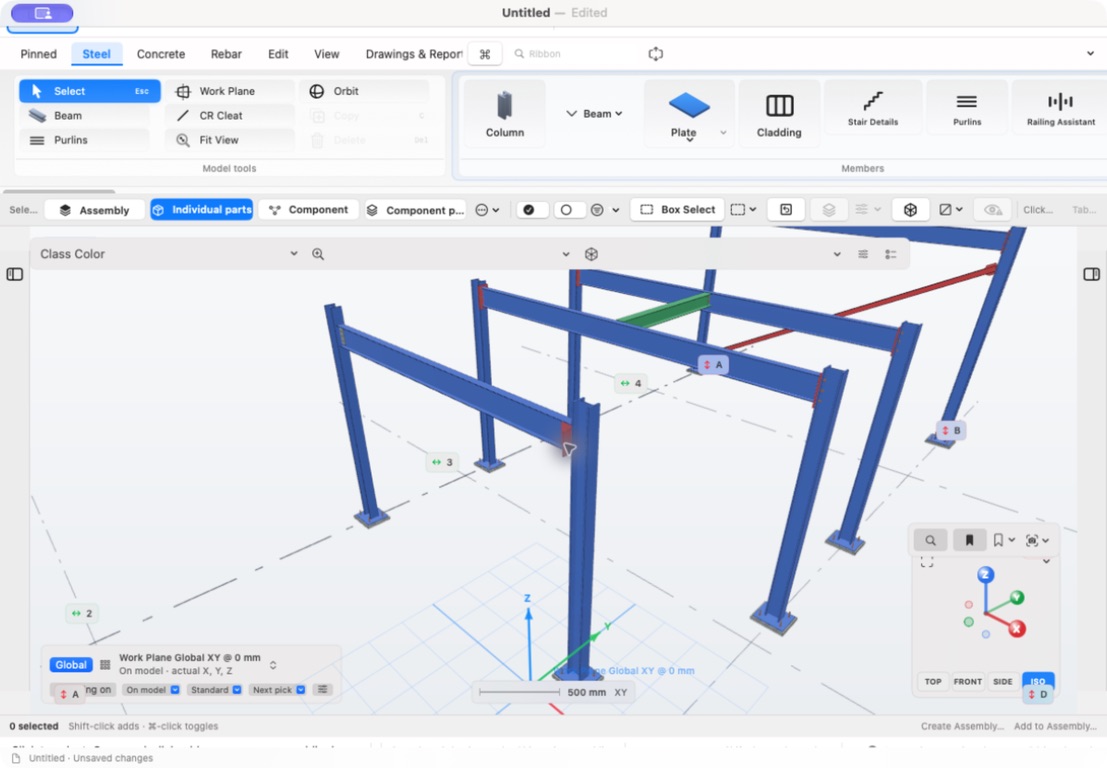
Staxis’s public site shows baseplates, end plates, fin plates, bolts and welds in its model workspace. These are useful elements to include in a representative evaluation job when the Mac release becomes available.
Every connection and output still needs checking by a suitably qualified person before fabrication or construction. A modelling workflow should make that review easier to perform and record.